There's probably no tool more central to cognitive behavioral therapy (CBT) than the thought log. At first glance, a thought log is a simple table that lets clients track their thoughts, emotions, and behaviors in certain situations. But the utility goes much further. A CBT thought log helps clients:
- notice triggering situations
- identify automatic thoughts
- notice patterns in thinking
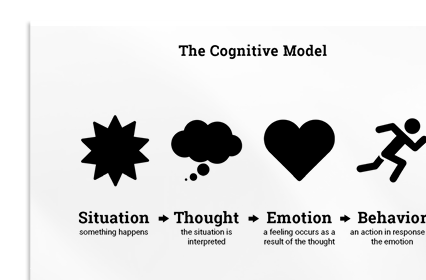
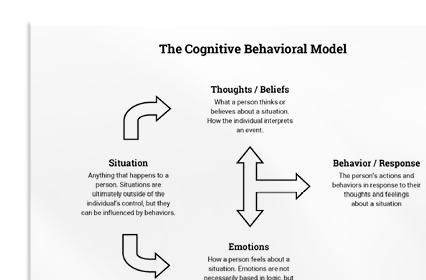
- make the connection between thoughts, feelings, behaviors, and their outcomes
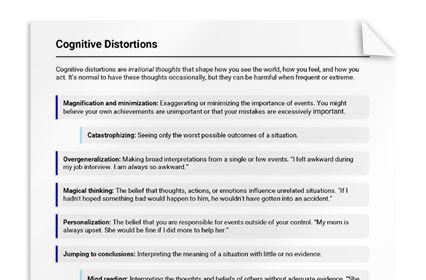
- prepare to challenge irrational or unhelpful thoughts
Our Thought Log PDF is designed to be as simple and useable as possible. Download the standard version for printing or the fillable version to complete the log on a device. If you think more guidance would be helpful, choose between different pre-filled examples in the “Download Options” section.
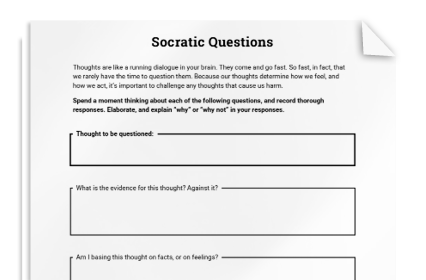
For further teaching, pair the thought log with a CBT model (see our simple cognitive model or advanced cognitive model printouts). After your client can identify their thoughts, try our cognitive restructuring tools like Socratic Questioning to help challenge unhelpful thoughts.