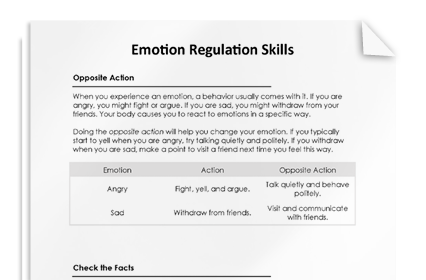
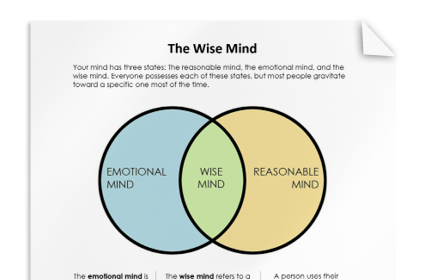
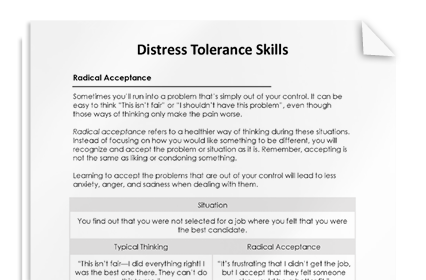
Intense, overwhelming emotions can quickly spiral into a mental health crisis. That’s why dialectical behavior therapy (DBT) places so much importance on learning skills to manage tricky emotions before they get out of hand.
Our DBT TIPP handout introduces four skills that clients can use as a mental health first-aid kit when in distress. The skills—presented through the acronym TIPP—help shift the body toward greater calm and stability:
- Temperature (cold): Slows heart rate and distracts from intrusive thoughts and intense emotions
- Intense exercise: Lowers stress hormones and increases feel-good neurotransmitters
- Paced breathing: Increases oxygen intake and lowers heart rate and blood pressure
- Progressive muscle relaxation: Helps the body let go of stress and triggers the relaxation response
Use this resource with clients who struggle with intense anxiety, overwhelming emotions, impulse control (e.g., substance misuse and self-harm), dissociation, or any other mental health challenge that requires a rapid, on-the-go intervention. Although originating from DBT, the TIPP skills can be paired with any somatic or body-focused approach.
Emphasize the importance of practicing these skills on a daily basis, making them easier to apply in moments of crisis. Some clients will benefit from all the skills, while others may prefer to focus on one or two favorites.
Consider asking clients to track their use of these skills with our Coping Skills Log.